Where businesses that preserve the Amazon become visible.
Overview
Brazil has 6 biomes and over 5 million small businesses in the Amazon, yet almost no way to show this bioeconomy to the world clearly. SEBRAE Nacional wanted a platform to map it and present the ecosystem at COP29 in Baku. The challenge was as much narrative as UX: turning 42 businesses across distinct biomes into one coherent account of the Amazon's economic future.

Understanding the ecosystem before designing any screen
Before any visual decision, the work was to understand the project's own content, so we facilitated discovery workshops with SEBRAE teams to map which businesses existed, in which biomes, at what maturity and scale potential.
The process mapped 42 businesses across Brazilian biomes, from deep tech startups like Aeroriver, with its flying boat for Amazon logistics, to geographic indication programs like Sebrae Origens.
An identity that communicated seriousness without losing warmth
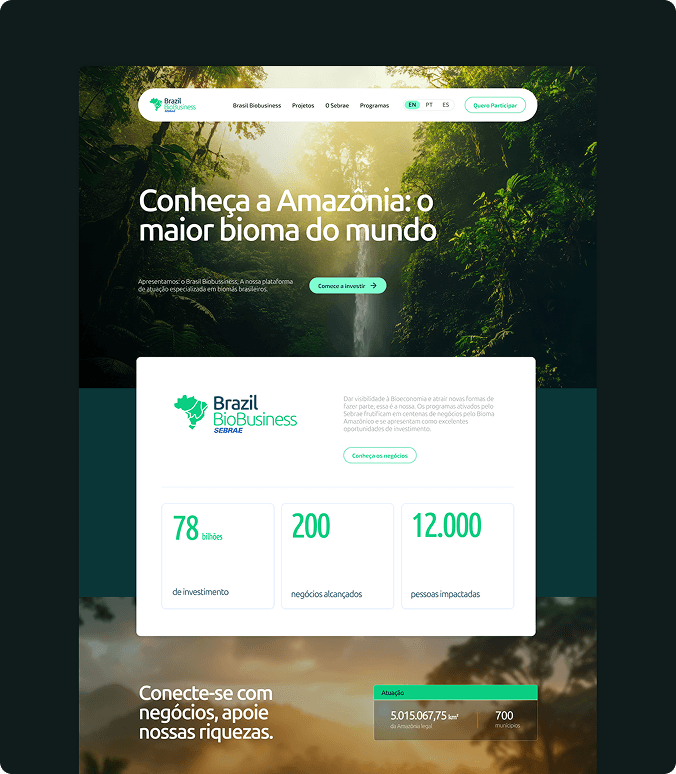
Navigating 42 businesses was solved with two access modes: the Business Map, a geographic entry with clickable pins and preview cards showing revenue and impact, and SEBRAE Programs, an initiative-based entry with dashboards per program for managers and investors.
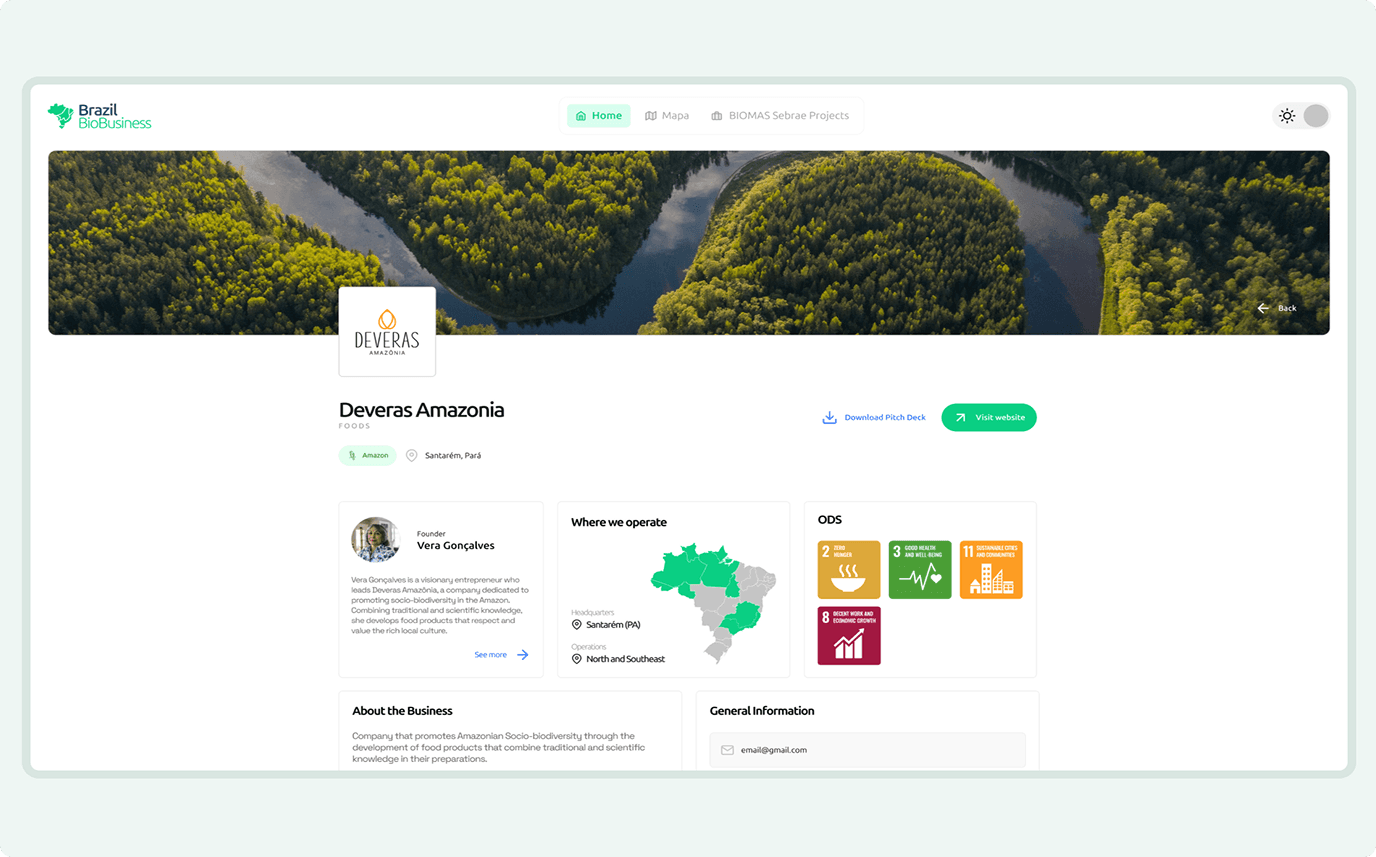
Opening any business leads to a profile that answers two questions at once, what the company does and its impact, joining the founder's story, the coverage map, and the UN SDGs, which translated local impact into the global language of COP29.



Two discovery modes

A visual taxonomy for 6 biomes
Each biome received its own icon, functional rather than decorative, so users could identify biomes quickly across filters, cards, and profiles. Filters combined three independent dimensions, SEBRAE project, segment, and biome, as selectable chips instead of dropdowns to keep visual context during the search.

Results
The platform launched at COP29 in Baku, where SEBRAE Nacional directors presented the Brazilian bioeconomy to global leaders. In three months the work covered discovery workshops, web and mobile architecture, a visual taxonomy by biome, and full branding.
The 42 businesses already existed; the platform gave them the structure and language that turned scattered data into a coherent argument about the Amazon's future. Design as a public policy tool, literal rather than metaphor.

