How hospitals manage and anticipate patient care at scale with AI.
Overview
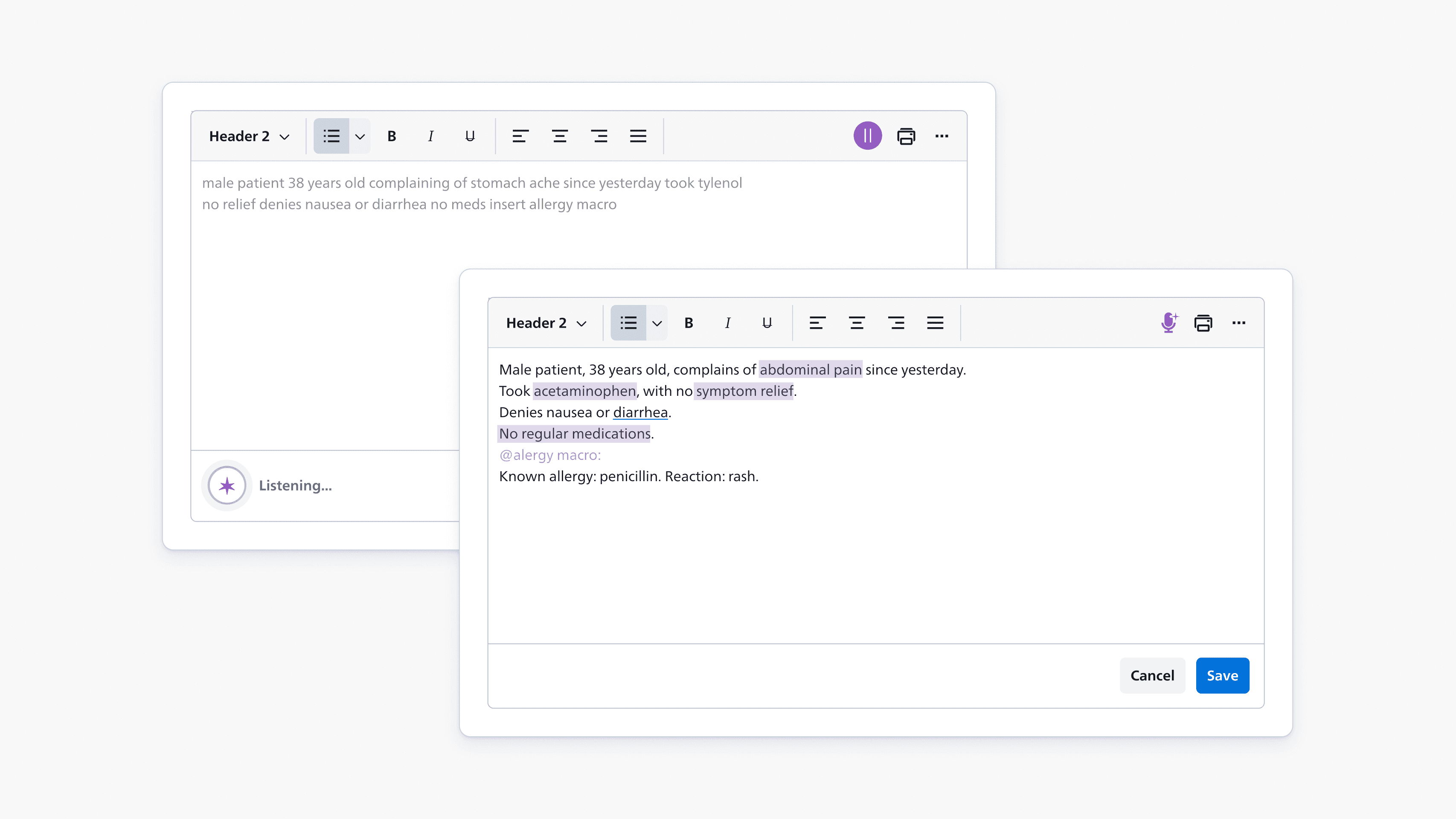
Doctors spend much of their shift documenting instead of caring. The first solution was an AI that listened to the consultation and filled the record in real time, until it transcribed 5mg of a medication instead of 0.5mg.
For an adult it would be harmless, for an infant it could be fatal. The error was caught in testing and never reached a patient, but it revealed something structural: an AI that documents without mandatory review isn't an assistant, it's a risk with
a nice interface.

Context and Problem
We started from a principle that became the core of the project: Human in the Loop. In critical AI systems, the human cannot be optional. They must be structurally necessary.

Mandatory Review
Documentation involving medication and dosages began to require active confirmation before being recorded. No shortcuts, no batch acceptance. It was intentional friction, designed to combat automation bias: the tendency to trust a system’s output just because it seems reliable.

The Visual System

The Ecosystem
After validating the clinical side, the project expanded to the patient. An AI Pre-Triage Assistant collects symptoms via chat before hospital arrival, assigns priority level, and prepares the team for care. This information arrives structured in the doctor’s record even before the patient enters the room. The same principles. The same visual system. Both sides of care connected.


